

The 2026 Grammy Awards unfolded as one of the most talked‑about versions of the ceremony in years, not just because of the big winners or show‑stopping collaborations, but because of some moments that lived beyond the televised portion and spilled into global conversation. One performance in particular — Justin Bieber’s intimate and unorthodox return to the Grammy stage — became an unexpected cultural milestone of the night. What made his presence at this year’s show so captivating was not just the music he performed, but how he prepared for it and the behind‑the‑scenes decisions that ultimately shaped one of his most memorable televised moments.
For years, Bieber has been one of pop music’s most recognizable figures, with a career defined by chart‑topping hits, theatrical music videos, and infectious pop anthems that dominated the airwaves. But at the 68th Annual Grammy Awards on February 1, 2026, the singer offered something markedly different — a performance stripped down, both literally and figuratively, that showcased vulnerability, artistic evolution, and confidence in a way few expected.
The Unexpected Rehearsal: Seven Minutes That Changed Everything
Award shows like the Grammys are known for meticulous preparation. Performers usually receive a 90‑minute rehearsal slot on the day before the broadcast, a window in which they coordinate sound checks, lighting cues, camera blocking, wardrobe finalizations, and sometimes elaborate choreography. Yet, according to Grammy Awards executive producer Ben Winston, Justin Bieber barely used that time before his moment on stage.
Winston shared a behind‑the‑scenes anecdote that instantly went viral among fans and industry watchers. About seven minutes into Bieber’s allotted rehearsal time, he had already run through his set once and was ready to leave. Winston recalled that after performing the song, Bieber asked, “How’d it look to you? You happy with it?” With reassurance from Winston that the run had looked beautiful, Bieber simply said, “Okay, fantastic. See you Sunday!” before making his way off the rehearsal stage.
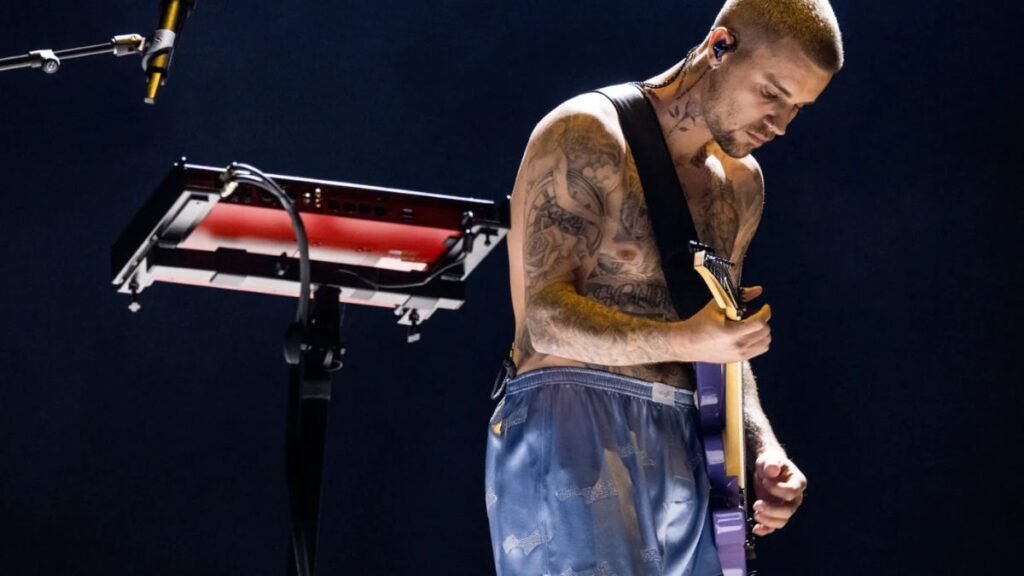
There was no elaborate choreography to refine, no wardrobe transitions to coordinate, and little need for additional crew adjustments. For a moment that would become one of the most memorable of the night, Bieber’s rehearsal was remarkably simple — just a brief run‑through of the song that would define his Grammy return. On Winston’s request, he did repeat the performance one more time so that camera operators could learn the cues, bringing the total rehearsal to roughly 15 minutes in a 90‑minute window.
Why So Little Practice? Confidence or Calculation?
For most artists, such minimal rehearsal might seem reckless. A live performance at the Grammys, with millions watching worldwide, is no light task. But Bieber’s approach reflected his confidence in his own artistry and his connection to the material he chose to present. Instead of ear‑worm pop or layered production, the singer opted to perform “Yukon,” a track rooted in emotion and vulnerability, and he did it entirely on his own, with no backup dancers or layered instrumental ensembles.
By embracing this stripped‑down aesthetic — and showing up to a rehearsal, then ending it within minutes — Bieber communicated something larger about his artistic identity at this point in his career: that he trusts his voice, his presence, and his emotional transparency. The choice was unusual for a Grammy performance, but it mirrored the intimacy and minimalism of the song itself, and suggested that for Bieber, technique and authenticity mattered more than spectacle or preparation time.
A Look That Shocked and Intrigued the World
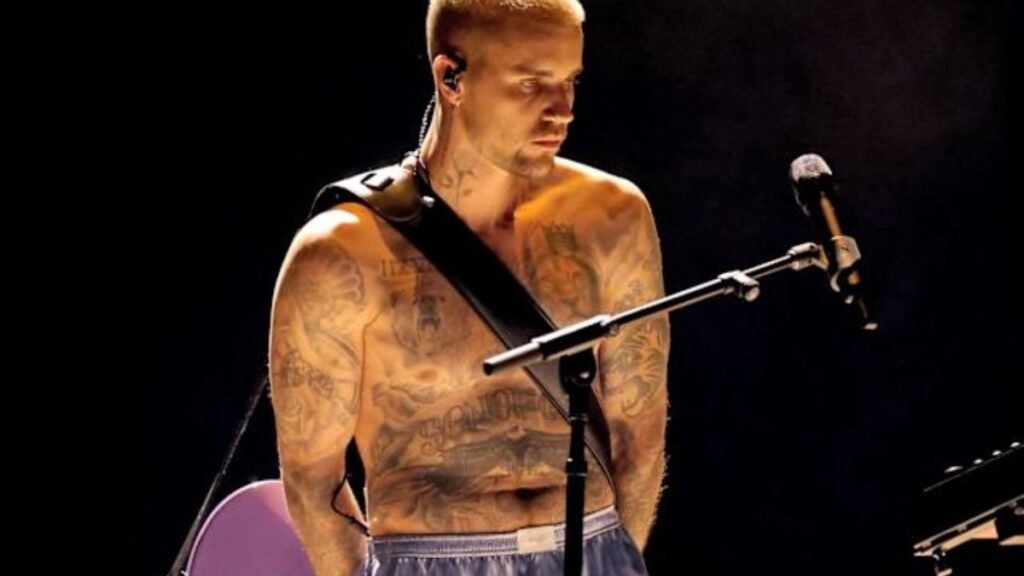
What really propelled Bieber’s performance into headlines was not just the brief rehearsal, but the outfit — or lack thereof — he chose for the moment. When the cameras cut to him on stage, fans saw the Canadian pop star dressed in nothing but a pair of satin boxer shorts and socks. The minimal wardrobe wasn’t announced in any fashion preview or wardrobe slideshow; the look was decided, or possibly spontaneously chosen, right as he stepped onto the stage.
Executive producer Winston later confirmed that neither the Grammys organizers nor Bieber’s team had finalized the wardrobe choice long ahead of time. According to reports, Bieber simply walked onto the stage with the intention of singing first, and the decision to perform shirtless in boxers unfolded as part of his live presence. This spontaneity made the moment feel raw and real to viewers, as though the singer had let go of all conventions and expectations for a deeply personal broadcast moment.
Interestingly, those boxers were reportedly from Bieber’s own fashion brand, SKYLRK, suggesting that while the look might have felt spontaneous, it also quietly doubled as a reflection of his broader creative ventures, woven seamlessly into the Grammys moment.
Audience Reaction: From Shock to Praise
As with many bold artistic choices, response to Bieber’s performance was mixed when the Grammys aired. Some viewers were shocked or amused by his minimal attire, calling it daring or unconventional for a ceremony traditionally known for glamour and formal wear. Social media quickly buzzed with comments ranging from praise of his vocal performance to playful jokes about his hairline or outfit.
Fans who loved the performance pointed out that Bieber’s vocals were strong, the emotionality of the live looped set was compelling, and the bold choice of minimal staging reinforced the sincerity behind the music. For a moment, the Grammy broadcast felt less like a polished awards show and more like a deeply intimate live session — a choice that many felt distinguished it from other commercialized performances on the same night.
Others brushed off the boxers moment entirely and focused on the broader arc of Bieber’s return to the stage after years of relative absence from Grammy performances. Many celebrated the fact that he was nominated in several major categories — including Album of the Year — and that this stripped‑down performance highlighted artistic courage more than any accessory or costume could.
The Emotional Core: Behind the Performance
What made this moment resonate wasn’t just the surprise or spectacle, however; it was the emotional context. After a hiatus from the spotlight, Bieber’s return carried with it an air of personal evolution. Already known for his vulnerability in interviews and his willingness to address life’s ups and downs in his music, this performance seemed to underscore a new chapter of creative authenticity.
Performing alone, with only his guitar and a loop station creating the song’s sonic landscape, Bieber demonstrated trust — trust in his voice, in the raw emotional power of the song, and in his own ability to connect without elaborate production. That choice spoke volumes in an industry where spectacle often overshadows substance.
Throughout the song, the camera frequently cut to his wife, Hailey Bieber, whose supportive gaze emphasized the personal significance of the moment. That human touch — a quiet testament to love, partnership, and emotional grounding — lent a deeper resonance to the performance that extended beyond industry headlines or Internet chatter.
Legacy and Impact: A Grammy Moment to Remember
By the time the broadcast concluded and audiences worldwide switched off their screens, Justin Bieber had given them far more than a memorable performance — he gave them a conversation piece. Music critics talked about his audacity to rehearse briefly and to trust spontaneity. Fans praised his vulnerability, and cultural commentators dissected the symbolic nature of his choice to strip away theatrical elements in favor of pure musical expression.
What started as a seven‑minute rehearsal became a defining moment not just of the 2026 Grammys, but of Bieber’s ongoing artistic narrative. It was a reminder that sometimes music connects most deeply when it strips away excess and rests on authenticity. In a world of carefully rehearsed spectacle, this rare glimpse behind the curtain — of an artist who trusted himself more than any elaborate plan — was unforgettable.
Conclusion: What We Learned From Bieber’s Grammy Moment
Justin Bieber’s 2026 Grammy performance was more than a stage appearance — it was a cultural moment defined by minimal rehearsal, maximal emotional honesty, and a willingness to surprise the world. The story of his seven‑minute run‑through, the spontaneous fashion choice, and the global reactions that followed captured more than headlines; it captured a moment where music, vulnerability, and unguarded creativity intersected.
In the years to come, when people look back on the biggest Grammy moments of the decade, this one — raw, unfiltered, and truly memorable — will likely stand out not because of anything extravagant, but because it was genuinely Justin, in his purest artistic form.
FAQs
1. What was special about Justin Bieber’s rehearsal at the 2026 Grammys?
Justin Bieber’s rehearsal lasted only seven minutes, showcasing his confidence and minimal preparation for a live, stripped-down performance.
2. Did Justin Bieber perform solo at the Grammys 2026?
Yes, he performed alone with no backup dancers or band, relying on his vocals and a loop station for the live performance.
3. Why did Bieber’s Grammy performance attract so much attention?
Fans and media highlighted his minimal rehearsal, intimate performance, and bold wardrobe choice, making it one of the night’s most memorable moments.
