
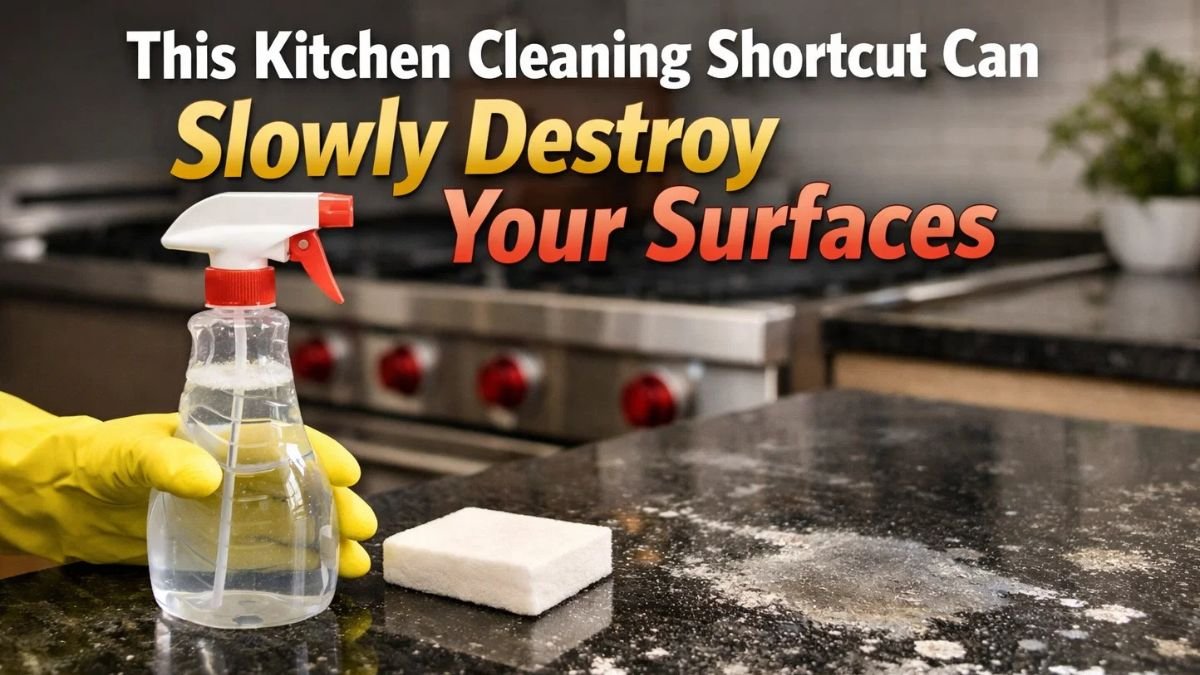
This Kitchen Cleaning Shortcut: In today’s fast-paced life, everyone wants to clean their home quickly and easily. Especially when it comes to kitchen cleaning, where oil, spices, and food stains accumulate daily, people often resort to shortcuts that save time but can cause long-term damage. Many people use harsh chemical cleaners or clean every surface with the same cloth. Initially, this method seems easy and effective, but gradually it weakens the kitchen surfaces.
The Hidden Danger of Harsh Chemical Cleaners
Many people believe that the stronger the cleaner, the faster the dirt will be removed. This belief leads to the overuse of bleach, harsh chemicals, or multi-surface cleaners. However, this approach can be dangerous for kitchen surfaces. Surfaces like marble, granite, wood, or laminate gradually lose their shine due to harsh chemicals. Initially, light stains appear, then the color fades, and finally, permanent damage occurs to the surface.
Using the Same Cleaner Everywhere is Not Right
Often, people use the same cleaner for everything – the sink, counters, gas stove, and cabinets. This is the biggest shortcut that causes gradual damage. Every surface has its own specific needs. For example, stainless steel requires a different cleaner than wooden cabinets, which need mild and safe products. If the same strong cleaner is used everywhere, some surfaces can get damaged quickly.
Misuse of Scrubbing Pads
To remove tough stains, people often use harsh scrubbing pads. This method shows immediate results, but it creates fine scratches on the surface. Initially, these scratches are not visible, but over time, dirt accumulates in them, and the surface starts looking old and discolored. Using harsh scrubbers, especially on non-stick surfaces, glass tops, and polished countertops, can cause significant damage in the long run. Wiping repeatedly with a wet cloth can also be harmful.
Many people think that quickly wiping surfaces with a wet cloth is sufficient for cleaning. However, if the cloth is not clean or contains residual chemicals, it can leave a residue on the surface. This can make the surface sticky or cloudy. Constant moisture on wood or laminate surfaces can also lead to swelling, cracking, or mold growth.
Protect your kitchen surfaces by using the right methods.
To keep your kitchen safe and looking new for longer, it’s essential to adopt some simple but effective habits. First, use different cleaners for different surfaces. Choose mild, surface-appropriate products instead of harsh chemicals. Use a soft cloth or sponge for cleaning and avoid abrasive scrubbers. After cleaning, it’s also important to wipe the surface dry with a clean cloth to prevent moisture buildup.
Regular care yields better results.
If the kitchen is cleaned lightly every day, the need for deep cleaning is reduced. Make it a habit to clean up spills immediately so that harsh chemicals or scrubbing are not necessary. This will not only extend the life of your surfaces but also keep your kitchen clean, sparkling, and safe at all times.
Conclusion
Taking shortcuts in kitchen cleaning may seem easy, but this habit can gradually lead to bigger problems. Using harsh chemicals, the wrong cleaners, or abrasive scrubbers damages both the shine and durability of surfaces. With the right methods and regular care, you can keep your kitchen looking new for a long time. A little caution and the right habits can extend the life of your kitchen and save you from unnecessary expenses.