
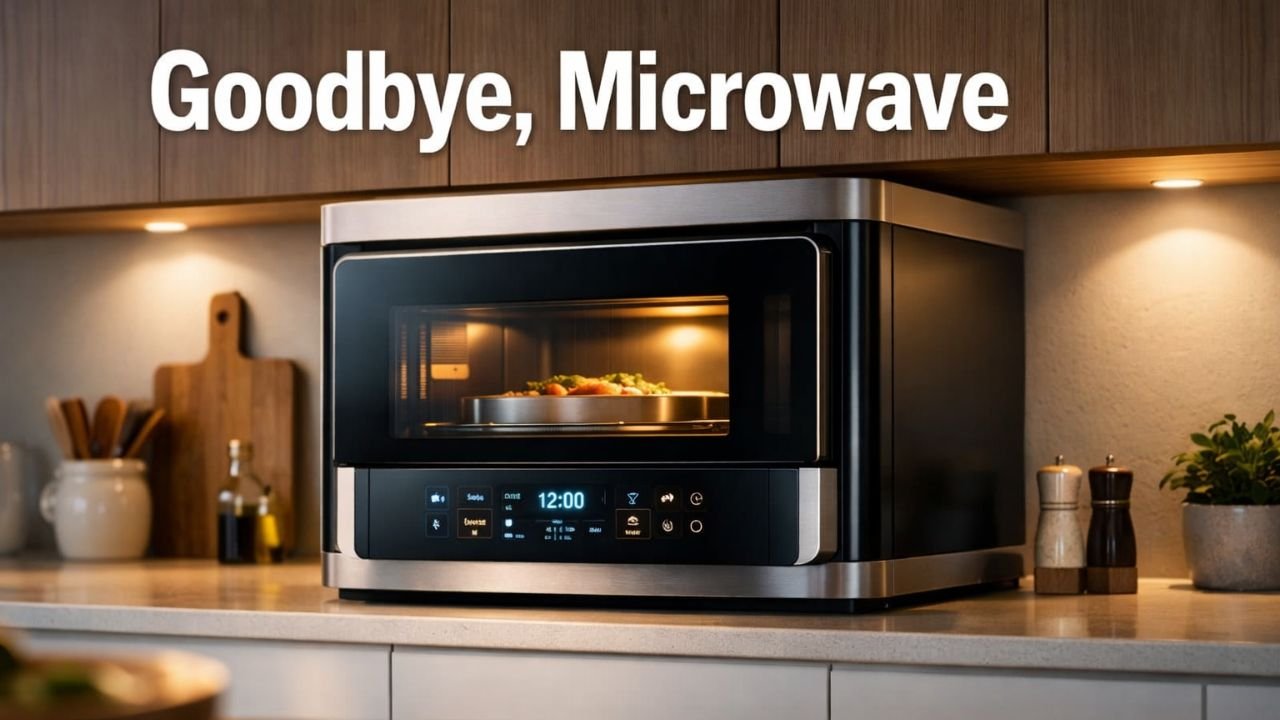
Standing in the kitchen in the evening, waiting in front of the microwave, has become a common scene in today’s fast-paced life. The thirty-second timer, your tired reflection in the glass door, and the slice of pizza in your hand that feels more like a compromise than a meal. The microwave’s hum is loud, convenient, and strangely lifeless. The food gets heated, but the flavor, texture, and satisfaction are somehow lost.
Now, this hum is slowly fading in many homes. Another appliance has begun to take its place on the kitchen counter—one that makes food taste like food again, not just heated. It’s just as easy, almost as fast, but the result feels like you actually cooked something. This story of saying goodbye to the microwave is being written quietly, and interestingly, many still perceive it as just a social media trend.
When the Air Fryer Quietly Won
The appliance replacing the microwave isn’t some futuristic robotic oven. It’s the air fryer you’ve seen in hundreds of Instagram reels and TikTok videos—a slightly bulky box, a drawer, circulating air inside, and a few buttons on the outside. Simple in appearance, but surprising in its effect.
The first time food comes out of it, the difference is clear. French fries are actually crispy, leftover roast chicken doesn’t taste dry but becomes juicy again, and frozen vegetables come out with a subtle sweetness instead of that strange blandness. Most people use it “just to try it,” but a week later, the microwave door is rarely opened.
This change isn’t limited to just a few households. In many families, the microwave has been relegated to the storage room or garage, and the air fryer has permanently taken its place on the counter. The statistics tell the same story—today, more than half of small kitchen appliance buyers in many countries are choosing air fryers. Air fryers have entire aisles dedicated to them in stores, while microwaves are slowly fading into the background.
This isn’t just a tech fad, but a lifestyle shift. Students are heating frozen dumplings in air fryers instead of instant noodles. Parents are reheating after-school snacks without drying them out. Seniors are abandoning deep fryers for a lighter, safer, and cleaner alternative. The reason is simple—speed with flavor, convenience with texture.
[also_read id=”2407″]
Air Fryer vs. Microwave: Where the Difference Lies
Microwaves heat food by agitating water molecules from the inside out. This method is fast, but often results in a rubbery or soggy texture. Air fryers, on the other hand, circulate hot air rapidly, like a small but powerful oven. This creates crispiness on the outside while retaining moisture on the inside.
For those who have accepted the chewy leftovers from their microwave as “just the way it is,” the first bite from an air fryer can be a revelation. Suddenly, you realize how much flavor you were sacrificing for convenience. Once you understand this difference, going back to a microwave feels like switching from high-speed internet to dial-up.
How to Live with an Air Fryer in Real Life
Making an air fryer a true alternative to a microwave requires a shift in mindset. It’s crucial to think of it not as a magic box, but as a “mini oven.” This small mental adjustment changes the entire user experience.
The most important factor is placement. If the air fryer is tucked away in a cupboard, it will become a gadget you only pull out once a week. But if it’s on the counter, plugged in and ready to go, it will become your go-to appliance. Heating pizza takes four to five minutes at 180 degrees, leftover potatoes six to eight minutes with a light drizzle of oil—it’s that easy.
Even a little attention during preparation makes a difference. A light coating of oil on vegetables, shaking the basket once halfway through, or using perforated parchment paper—these little things elevate the food from ordinary to extraordinary. For those coming from the world of microwaves, the biggest revelation is understanding that the air fryer isn’t just for frozen nuggets. It’s fantastic for leftovers, where the microwave often disappoints.
Yesterday’s roast chicken, sliced thinly, becomes juicy again in five to six minutes. Dishes like baked pasta, lasagna, or gratins, when reheated in a small oven-safe dish, remain golden and crispy on top and tender inside. Leftovers in the fridge suddenly feel like an opportunity, not a chore.
Common Mistakes and Simple Rules
Of course, like anything, there’s a learning curve. Overfilling the basket so air can’t circulate, skipping preheating for crispy results, or trying to heat soup in it—these are common mistakes. The truth is, nobody uses perfect recipes and millimeter-level planning in everyday life.
A few simple rules keep it fun instead of frustrating:
Shake or flip halfway through for even crisping.
Leave space between pieces so air can circulate easily.
Use small oven-safe dishes for saucy foods.
Keep a cloth or brush handy for quick daily cleaning.
And keep the microwave as a backup for very soft or liquid items.
Gradually, these habits become second nature, and the air fryer becomes not just “that thing I should use more often,” but the appliance you rely on.You trust without thinking.
What Saying Goodbye to the Microwave Actually Changes
This change isn’t just about a machine. It also changes how you think about food. You intentionally make an extra serving because you know it will taste fresh again when reheated in the air fryer. You don’t hesitate to roast vegetables on Sunday because you know they won’t be soggy and tasteless later in the week.
Instead of ordering takeout on a tired Tuesday evening, you can throw frozen fish and broccoli into the basket, add a little oil, press two buttons, and you’re done. Ten minutes later, the kitchen smells like you actually cooked—even though the effort was minimal.
There’s also the environmental aspect. For smaller portions, an air fryer uses less energy than a full oven and reduces food waste caused by microwaves. When leftovers taste good, they don’t end up in the trash.
The emotional impact is even more subtle. Food goes from being an emergency necessity to a slightly more thoughtful experience. On a bad day, this difference matters more than you might expect, and on a good day, it simply means your fries are crispier.
[also_read id=”2379″]
In the End: Not the End of the Microwave, Just a Change of Role
You don’t need to throw out your microwave tomorrow. In most homes, it gradually fades into a supporting role—still present, but no longer the main act. The air fryer takes its place because it makes everyday cooking a little better, a little more satisfying.
Ultimately, it’s not about the technology. It’s about the small pleasure you get when even a quick meal feels like you’ve taken the time to treat yourself. And perhaps that’s why the microwave’s long reign is quietly coming to an end.